
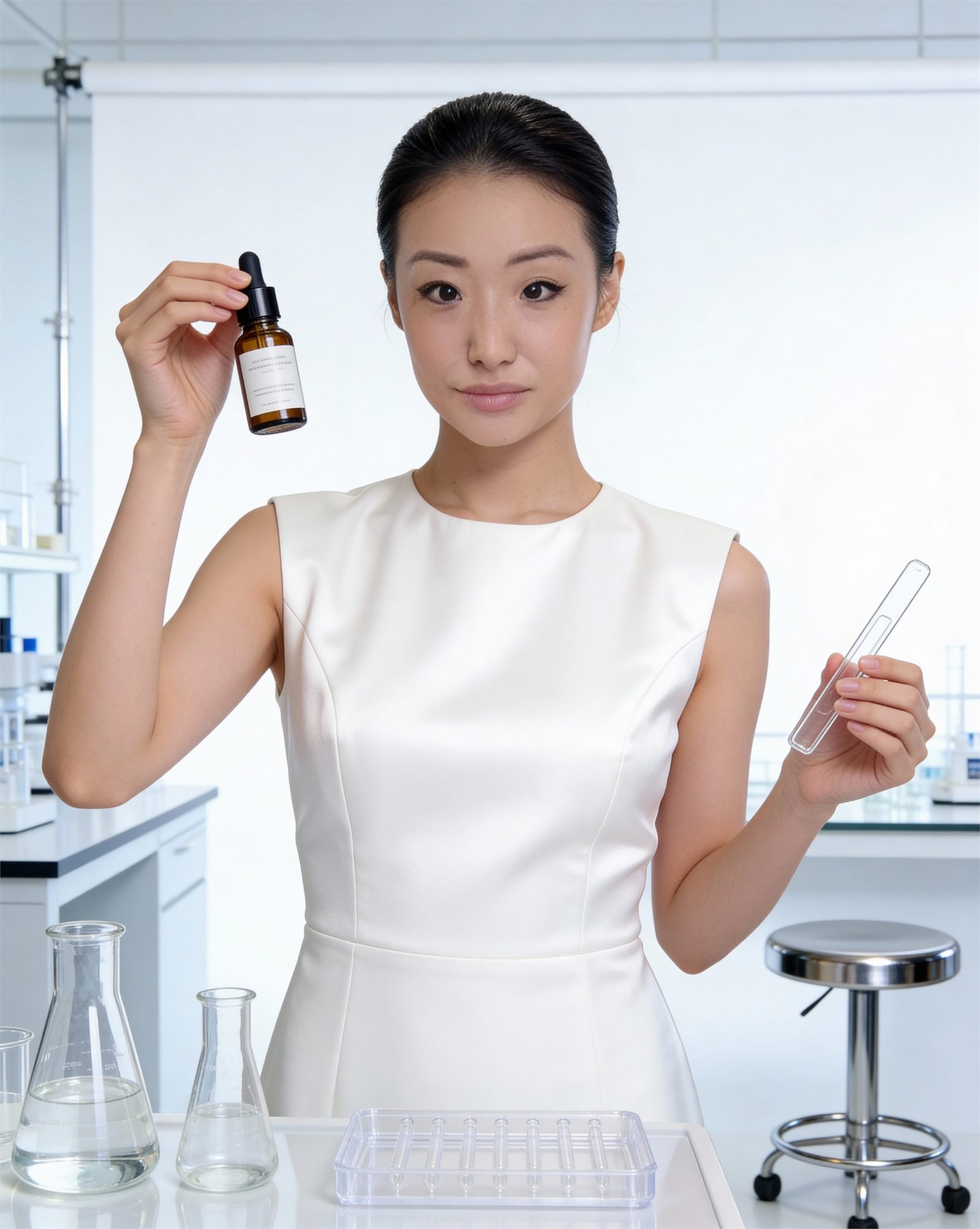
If a beauty founder is going to talk publicly about peptides, GHK-Cu is one of the best places to begin. It is easier to explain in skin language, and it belongs more naturally in a beauty conversation than many of the other peptide-adjacent topics women hear about online.
Why this is the right first stop
GHK-Cu feels beauty-native. Women can understand why it comes up in conversations about skin support, visible recovery, and routine building without feeling like the site is smuggling medication-style claims into a skincare article.
Why selective readers tolerate it more easily
- It fits topical skincare language more naturally.
- It can be discussed in routine terms instead of internet miracle terms.
- It helps Susie establish that she knows how to keep peptide education elegant and grounded.
How Susie should frame it
Susie should talk about GHK-Cu as a skin-focused ingredient conversation, not a giant life-optimization claim. That means discussing where it fits in a routine, why women ask about it, and how delivery questions can change the conversation without making it sound magical.
What can responsibly appear in Susie’s edit
- Topical copper-peptide or peptide-support serums with disciplined claims.
- Routine education around how a skin-support product fits with brightening, recovery, or treatment nights.
- Micro-infusion or device content only when the topical ingredient story and instructions are clear enough to explain without drama.
Where the line still matters
Even the strongest beauty-relevant peptide topic should not be oversold. The point is not to turn GHK-Cu into a miracle ingredient. The point is to show what careful, skin-first peptide education looks like when a founder respects both beauty language and its limits.
Skin Peptides
Get Susie's skin-first peptide notes and the topical ingredients worth understanding.
Start with the beauty-relevant side of the category before moving into heavier territory.